Certifications: ISO 22000 HACCP Hygienic • ISO 9001 Quality • ISO 14001 Environment

Adiabatic cooling & process

An efficient way to remove excess heat

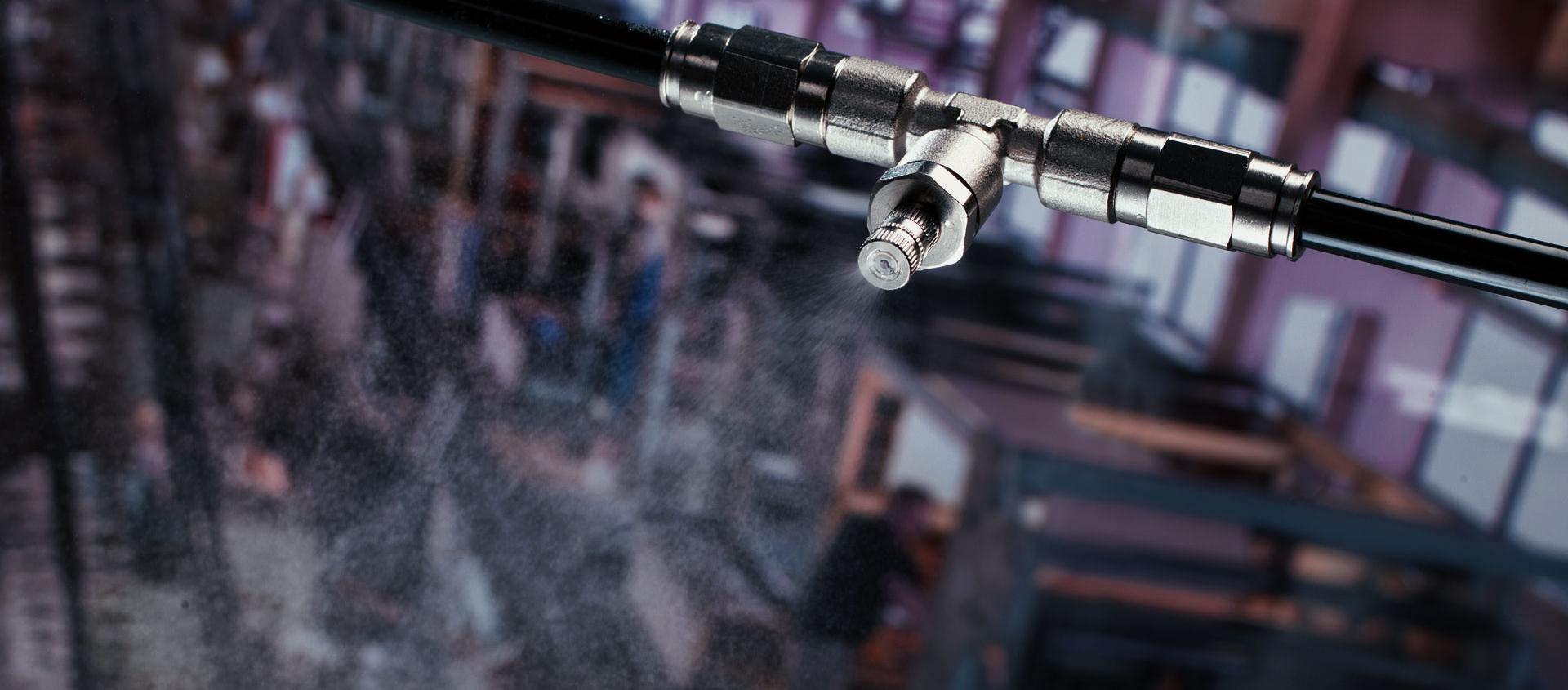
An adiabatic process is a result of the first law of thermodynamics, which states that energy in a closed system does not disappear – it merely moves elsewhere. In other words, the adiabatic cooling effect occurs when heat is forced to disperse its energy by means of an adiabatic system. An air humidification system that atomizes and evaporates water in a warm environment can create this effect.

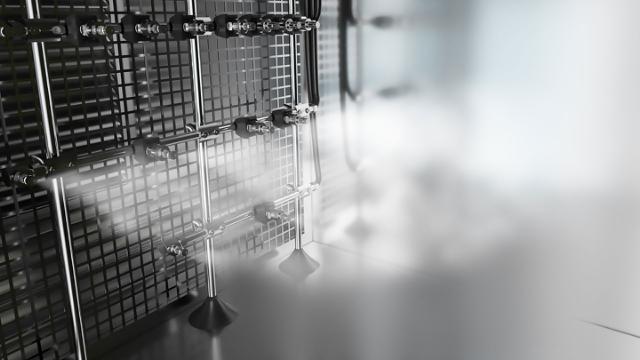
Humidification systems can generate an adiabatic cooling effect by introducing and evaporating a fine water mist into the surrounding air. The evaporation provides a cooling effect of approximately 630 W per kg of water.

Adiabatic process and Cooling effect

The cooling effect of evaporating water vapor is approximately 630 W per kg of water evaporated – and for each kilogram of water, about 2 W is required in an Airtec® high-pressure air humidification system. By harnessing a natural process in this way, evaporative cooling becomes a highly energy-efficient method for cold rooms and production facilities with localized heat sources.

This energy efficiency is due to the fact that, unlike conventional air conditioning systems, evaporative cooling occurs naturally without the need for compressors or other power-consuming components.


Excess heat in industrial production

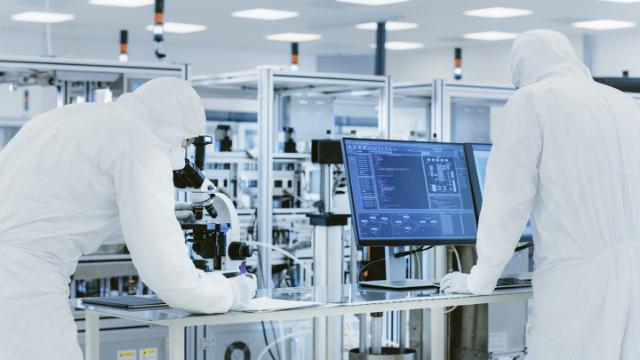
In industrial facilities, many processes generate excess heat – overheating. This raises the temperature and lowers the relative humidity, with all the negative side effects this can cause: risk of electrostatic discharges, drying out of products, reduced employee comfort, and less control over production processes.

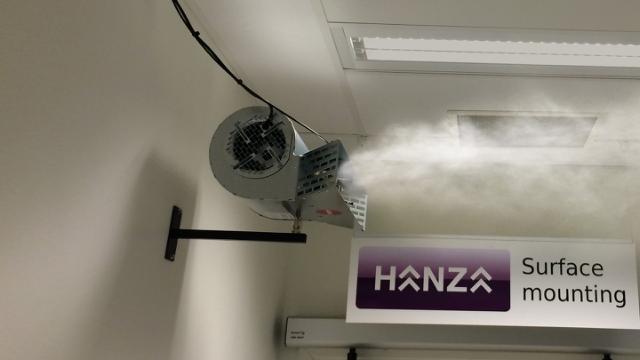
Supplying water through an air humidification system can reduce or completely eliminate these negative effects caused by excess heat – and the evaporative effect of introducing a water spray into a warm space also provides an energy-efficient cooling effect.

2 types of Air Humidifcation systems

Air humidifiers can create a cooling effect in two different ways – through evaporation or by adding a fine water mist to the airflow.

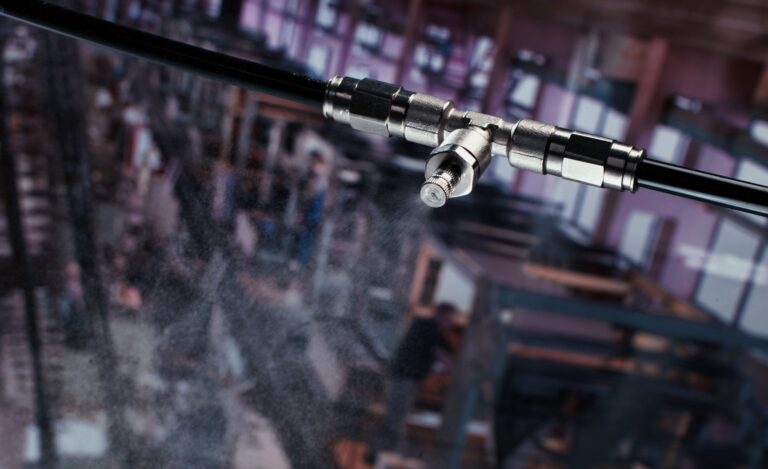
Humidifiers are typically installed in an air duct or in-room systems, where nozzles or atomizers deliver water vapor locally.

In general, room-based humidification systems are better at harnessing the adiabatic effect and will be more effective at removing excess heat in a production environment.

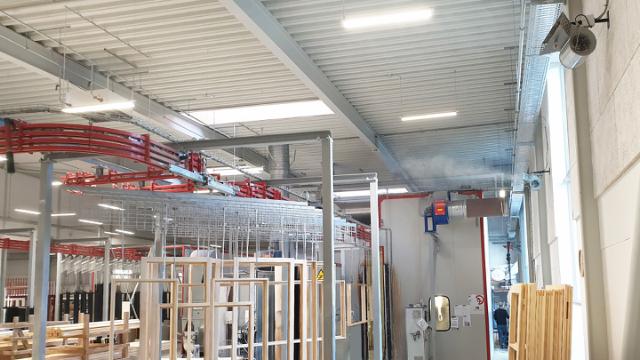
Room-installed air humidification systems are commonly used in production sites such as printing facilities, electronics manufacturing, and other production settings where high, localized heat is generated.

Room-installed Air Humidification systems

Room-installed air humidification systems are typically used in production sites such as printing facilities, electronics manufacturing, and other production environments where high, localized heat is generated.

Room-installed air humidification systems can:

  • Reduce excess heat through adiabatic cooling

  • Protect against electrostatic discharges (ESD) by controlling humidity

  • Reduce the risk of product drying

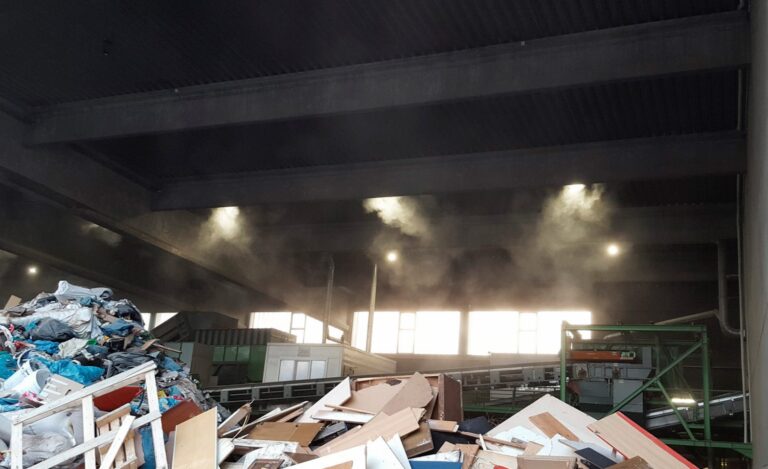
  • Help control airborne dust, which can pose a threat to production equipment, product quality, and employee health

Duct Humidification Systems

A duct humidification solution is also called an AHU solution (Air Handling Unit) and is an air humidification system integrated into a ventilation system. It introduces atomized water into the airflow.

This type of air humidification system is typically used in larger buildings such as offices, museums, theaters, hospitals, and similar spaces, where controlling humidity is important both to enhance the comfort of occupants and to protect materials and equipment.


Capacity and Design

At Airtec, we design all our air humidification systems based on standard components combined with over thirty years of experience across a wide range of industries and applications.

This is the foundation of every good system: robust components, in-depth specialist knowledge, and, above all, a thorough assessment of the specific requirements and possibilities of each installation.

Read more about the process we always follow with potential new customers to identify needs and outline the right solution – click here to learn more about the process.

Free project assessment

At Airtec®, we offer a free assessment of your company’s facilities to identify how an air humidification system can optimize and improve both production and the working environment.

In close dialogue with you, our project engineers examine the humidity requirements for each product in your production. We also map out the system’s layout, seasonal variations, existing ventilation systems, and all processes that may generate excess heat – just to name a few of the parameters we consider.

Based on this assessment, we provide a detailed recommendation for the best way to optimize production, storage, and the working environment.


Airtec - Specialists in Air Humidifaction

Airtec® is your specialist when it comes to designing, installing, and servicing air humidification systems for industrial facilities, commercial buildings, and warehouses.

We help you optimize uptime and eliminate issues related to static electricity, airborne dust, product drying, and excess heat.

At Airtec®, we have experienced project engineers who, over decades, have developed and designed the perfect air humidification solution for a wide range of industries.

With our experience and technical know-how, we can help you understand the benefits you and your customers can expect from installing an Airtec® air humidification system – and we can also accurately calculate ROI and energy requirements.


Our customers and cases

Read more about how we have helped companies create and maintain a productive environment